The 5:15 Express Test — Measuring Ballistic Durability Beyond Traditional Certification
In the world of ballistic protection, product performance is often defined by standardized certification testing. Those standards are essential because they establish minimum levels of protection and ensure consistency between manufacturers. However, certification testing answers only one question: can the armor survive a prescribed number of impacts under controlled laboratory conditions?
It does not answer another question that may be equally important: how long will the armor continue to protect the wearer when subjected to multiple, closely spaced impacts during a real-world attack?
The 5:15 Express Test was developed to help answer that question.
Why Conventional Testing Has Limitations
For decades, ballistic armor has been evaluated using carefully controlled testing protocols. Shot placement, spacing, projectile type, impact velocity, and environmental conditions are all prescribed to produce repeatable certification results. These procedures are appropriate for certification.
Real-world shootings, however, rarely resemble laboratory conditions. Rounds are not evenly spaced. Multiple impacts frequently occur within only a few inches of one another, and they often happen in rapid succession before the ballistic system has an opportunity to recover from the previous impact.
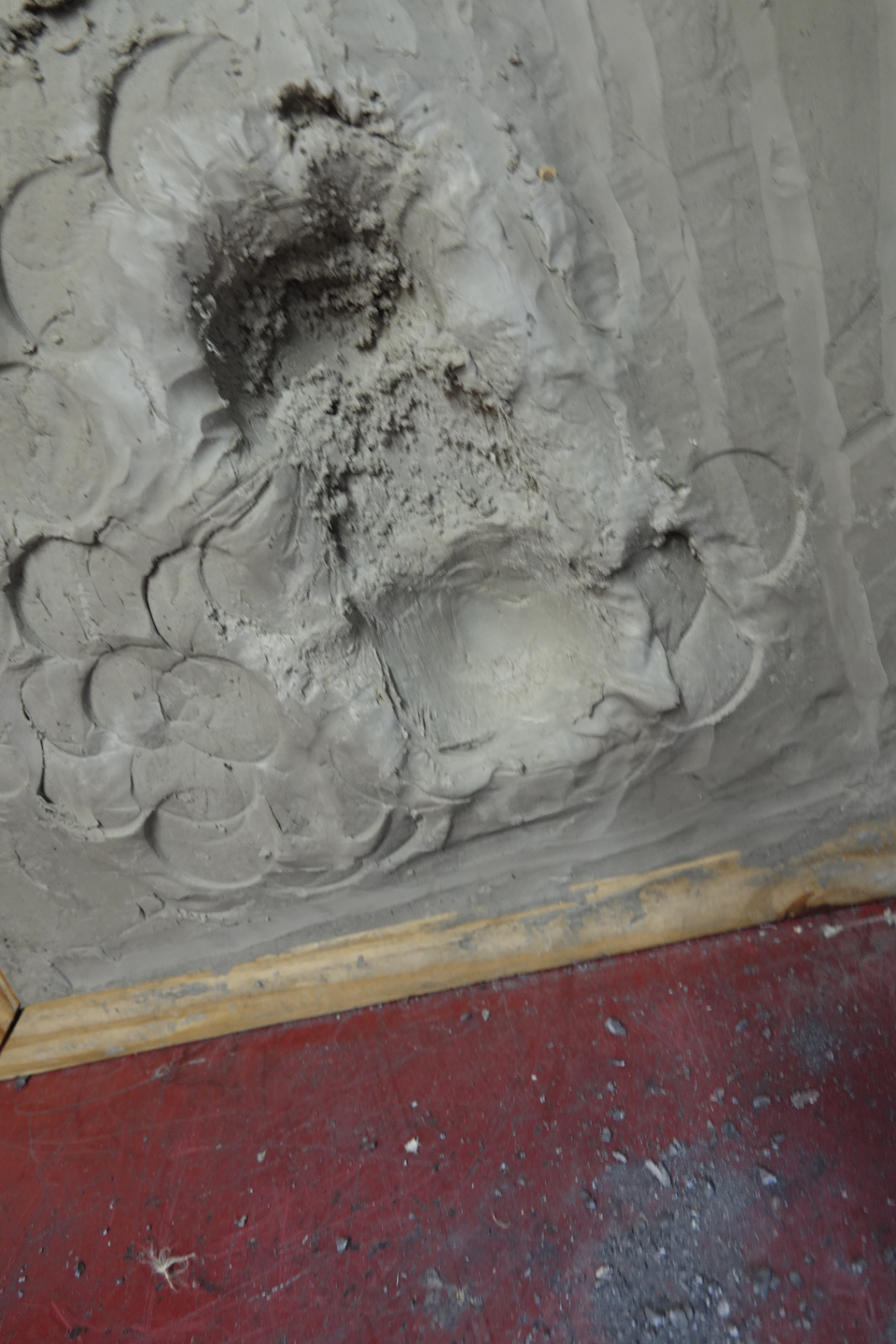
Traditional certification testing also emphasizes blunt-force signature measurements using Roma Plasticine No. 1 clay. While clay remains an important calibration medium within NIJ testing, its composition and calibration methods have evolved over the decades, and its relationship to actual injury mechanisms has long been debated within the ballistic community.
Certification testing is indispensable — but it was never intended to evaluate every aspect of ballistic durability.
Introducing the 5:15 Express Test
The 5:15 Express Test was developed to evaluate how a ballistic system performs under an intentionally severe multiple-hit scenario.
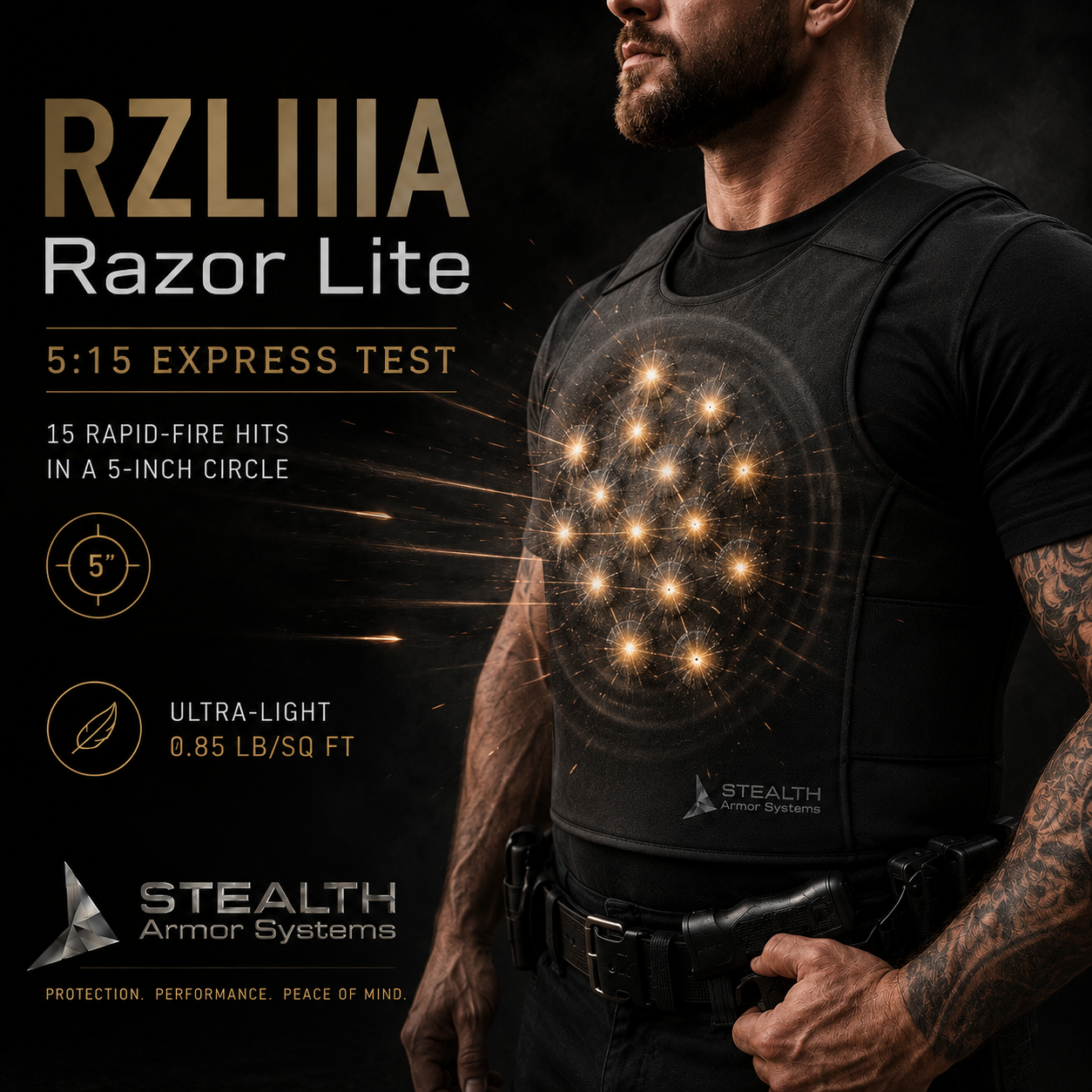
The protocol is straightforward. A 5-inch diameter circle is marked on the armor panel. Using a 16-inch 9 mm carbine, fifteen rounds of Winchester 124-grain FMJ ammunition are fired rapidly into that single 5-inch circle at velocities representative of Level IIIA/HG2 threats.
Unlike conventional testing, no effort is made to maximize spacing between impacts. The objective is to expose the ballistic system to an extremely concentrated attack that more closely resembles a close-quarters engagement than a laboratory certification protocol.
Not Whether It Fails — When It Fails
The significance of the 5:15 Express Test lies in what it measures. This test is intentionally severe. For most soft armor systems, the question is not whether the armor will eventually fail under these conditions — it is when.
Instead of producing a simple pass-or-fail result, the 5:15 Express Test evaluates progressive ballistic durability. Each successive impact damages fibers, laminates, and energy-absorbing materials. As those impacts accumulate within a confined area, the ballistic system gradually approaches its failure point.
The meaningful measurement therefore becomes: how many closely spaced impacts can the armor absorb before the first penetration occurs? That provides valuable engineering information that traditional certification testing was never designed to measure.
Performance Under Extreme Conditions
When evaluated using the 5:15 Express Test, many conventional soft armor systems experience penetration after only a few closely spaced impacts within the 5-inch test area.
By comparison, the HEXAR™ RZL IIIA/HG2 has repeatedly demonstrated exceptional durability under this demanding protocol. At only 0.86 lbs./sq. ft., the RZL IIIA/HG2 combines an exceptionally low areal density with the ability to withstand one of the most demanding concentrated-impact supplemental evaluations developed by SAS MFG.
The purpose of the test is not to replace NIJ certification, nor to suggest that certified armor is inadequate. Rather, it provides an additional method for evaluating how ballistic systems perform after repeated damage begins to accumulate.
Looking Beyond Minimum Standards
NIJ certification establishes the minimum performance requirements that every compliant armor system must satisfy. The 5:15 Express Test examines a different characteristic entirely: how resilient is the ballistic system after repeated, closely spaced impacts begin to degrade its structure?
Those are two different engineering questions, and together they provide a more complete understanding of armor performance.
In life-threatening encounters, attackers do not follow prescribed shot spacing, nor do they wait between impacts. Real-world violence is unpredictable, concentrated, and unforgiving.
The 5:15 Express Test was developed to evaluate ballistic durability under those conditions, providing purchasers with additional insight into how an armor system performs when pushed well beyond conventional certification.
Have a procurement question this article didn't answer?
Our sales engineers respond directly. No call-center, no sales script.
Contact engineering
The relativity of backface signature — why the 44 mm number isn't what you think
Backface signature, explained — what the clay actually tells you