The relativity of backface signature — why the 44 mm number isn't what you think
Ask any procurement officer what 'passes' an NIJ ballistic test and the answer comes back fast: 44 millimeters of backface signature, measured in oil-based modeling clay. That single number — born in 1972, baked into NIJ 0101.06, and inherited by 0101.07 — has become the gravitational center of the body armor conversation. It deserves a closer look, because the more you understand how the number is produced, the less absolute it becomes.
Backface signature (BFS) is not a measurement of injury. It is a measurement of the deepest depression left in a block of Roma Plastilina No. 1 clay sitting behind the armor at the moment a round is stopped. The clay is conditioned to a specified hardness, the panel is clamped to its face, the round is fired, and a technician measures the crater. If the crater is 44 mm or less, the panel passes. If it is 45 mm, it fails. The threshold has not meaningfully changed in fifty years.
The clay is a surrogate. It is not skin, it is not muscle, it is not a thorax. It was chosen in the early 1970s because it was repeatable across labs at room temperature — a property that mattered enormously when the alternative was gelatin blocks that varied batch to batch. The 44 mm threshold was correlated, in that era, to a level of blunt trauma considered survivable by Army medical staff working with the data available. It was a practical engineering choice, not a biological constant.
What the clay does well: it gives every lab in the country a common ruler. Two panels tested in two facilities should produce backface signatures within a few millimeters of each other if the test is run correctly. That repeatability is the entire reason the clay survives — it makes pass/fail decisions defensible in procurement disputes.
What the clay does not do: it does not scale with threat. A 9 mm round stopped at 22 mm of BFS and a 7.62×51 stopped at 42 mm of BFS both 'pass' — but the energy delivered to the wearer's chest is wildly different. BFS measures depth, not energy, and depth in clay is a poor proxy for energy transferred to a living thorax. Two panels with identical BFS numbers can deliver very different blunt-force loads.
Geometry matters too. A narrow, deep crater and a broad, shallow crater can produce the same peak depth on a clay caliper while distributing radically different pressure profiles across the wearer's body. NIJ measures the maximum point only. The shape — the thing that actually governs how force couples into the body — is discarded.
Temperature matters. Clay hardness is a strong function of temperature, and clay sitting under stadium lights at a demonstration does not behave the same as clay conditioned to the NIJ specification of 35°C ± 2°C. A panel that 'passes' a hot-clay informal demo may fail in a properly conditioned lab. The reverse is also true.
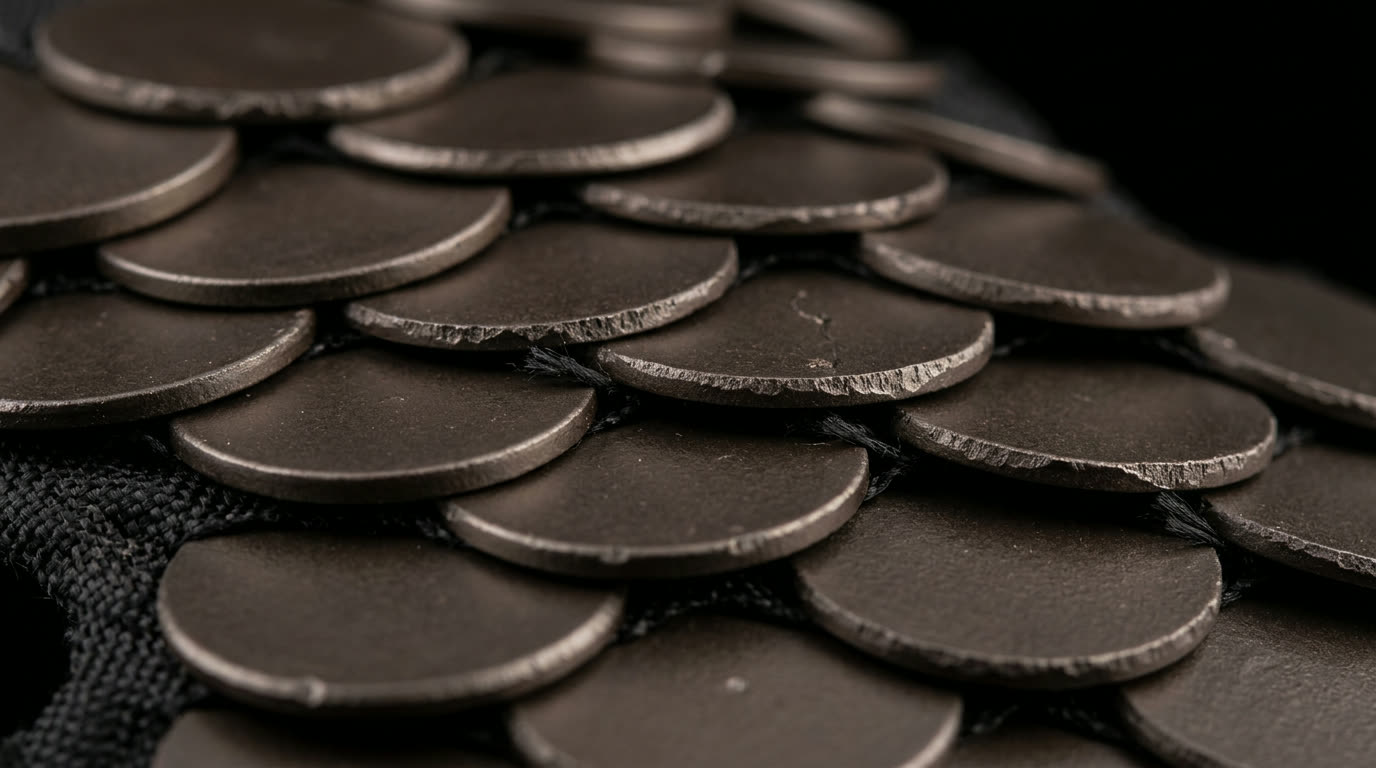
Geometry of the panel matters. A flexible, contoured panel deforms differently against rigid clay than a flat hard plate. Single-curve plates, multi-curve plates, and disc-array flexible systems all distribute load into clay differently, and the BFS number reflects that distribution as much as it reflects the underlying ballistic performance.
Multi-hit shifts the picture again. NIJ 0101.06 Level III is a multi-hit standard — six rounds per panel — and each successive shot is taken into a panel already damaged by the previous ones. BFS rises with hit count. A panel that records 38 mm on shot one may record 42 mm on shot six. The reported number is the worst case, not the average, and a panel that is comfortably under threshold on first-shot performance can be a millimeter from failure by the end of the sequence.
None of this means BFS is wrong. It means BFS is relative. It is a comparative tool — extremely useful for ranking panels against each other within the same protocol, and largely useless as an absolute predictor of wearer injury. The number tells you that one panel deformed more than another panel under identical conditions. It does not tell you what would happen to the human behind the panel.
What should procurement officers do with this? Three things. First, treat BFS as a screen, not a verdict — any NIJ-certified panel has cleared the threshold, and the residual differences between certified panels are smaller than the differences in fit, coverage, and multi-hit behavior. Second, ask for the full test report, not just the certificate number — the shot-by-shot BFS curve tells you far more than the headline maximum. Third, weight coverage and articulation as heavily as BFS — a panel that records 35 mm but only protects 60 percent of the torso has lost the argument to a panel that records 42 mm and wraps the wearer.
The 44 mm threshold is a tool. Like every tool, it has a sharp end and a dull end, and the user has to know which is which. The body armor industry has spent fifty years optimizing for that single number, and the optimization has produced real gains — panels are lighter, thinner, and more reliably tested than they were a generation ago. But the number is not a substitute for engineering judgment, and a procurement decision built only on BFS will eventually disappoint the officer who has to wear the result.
We design to the standard. We also design past it — for the multi-hit case, for the off-axis hit, for the cold morning and the hot afternoon, for the geometry of a human torso under a vest carrier that fits. The 44 mm number is where the conversation starts. It should never be where the conversation ends.
Have a procurement question this article didn't answer?
Our sales engineers respond directly. No call-center, no sales script.
Contact engineering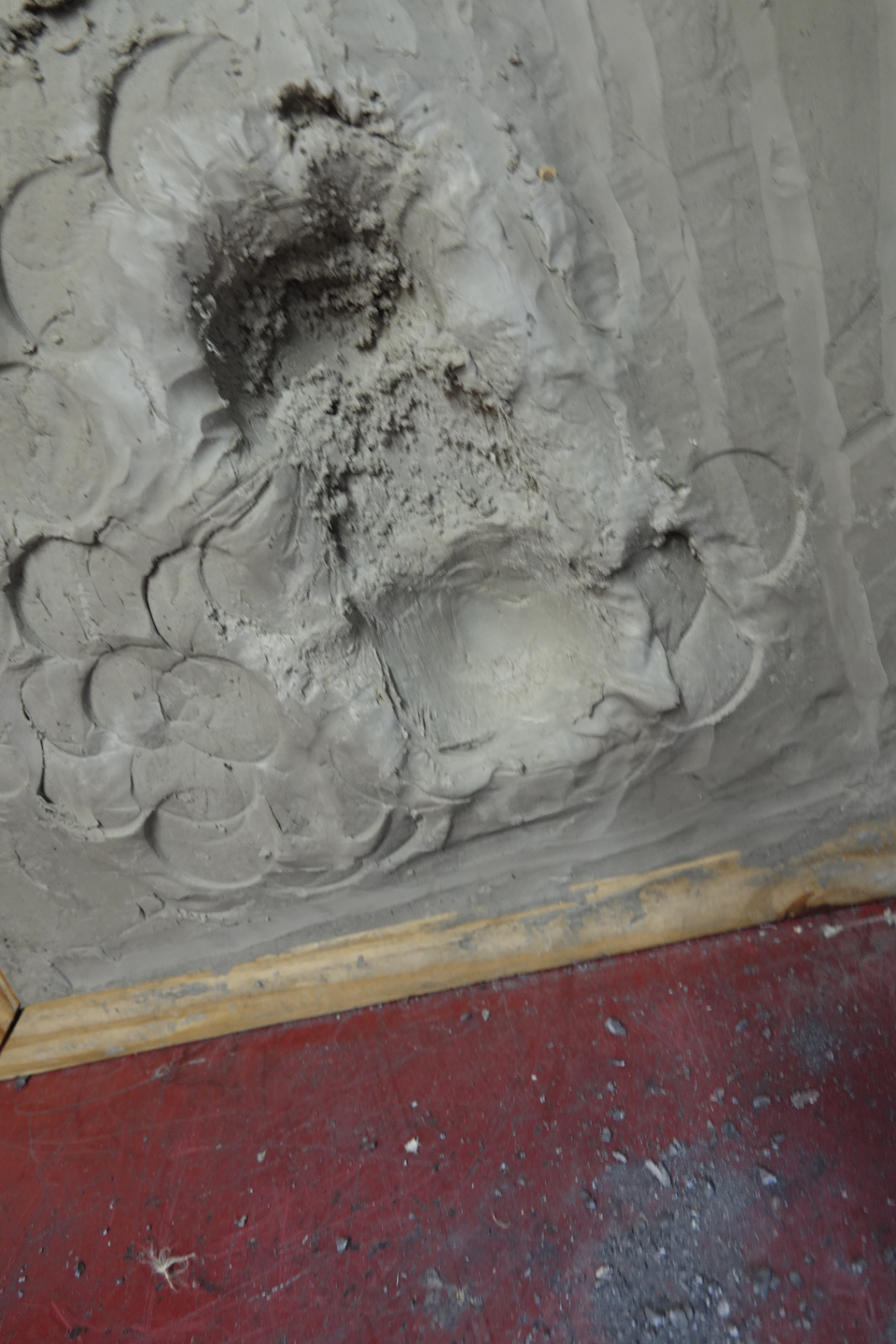
Backface signature, explained — what the clay actually tells you
Zylon, NIJ 0101.06, and the Evolution of Soft Armor Testing