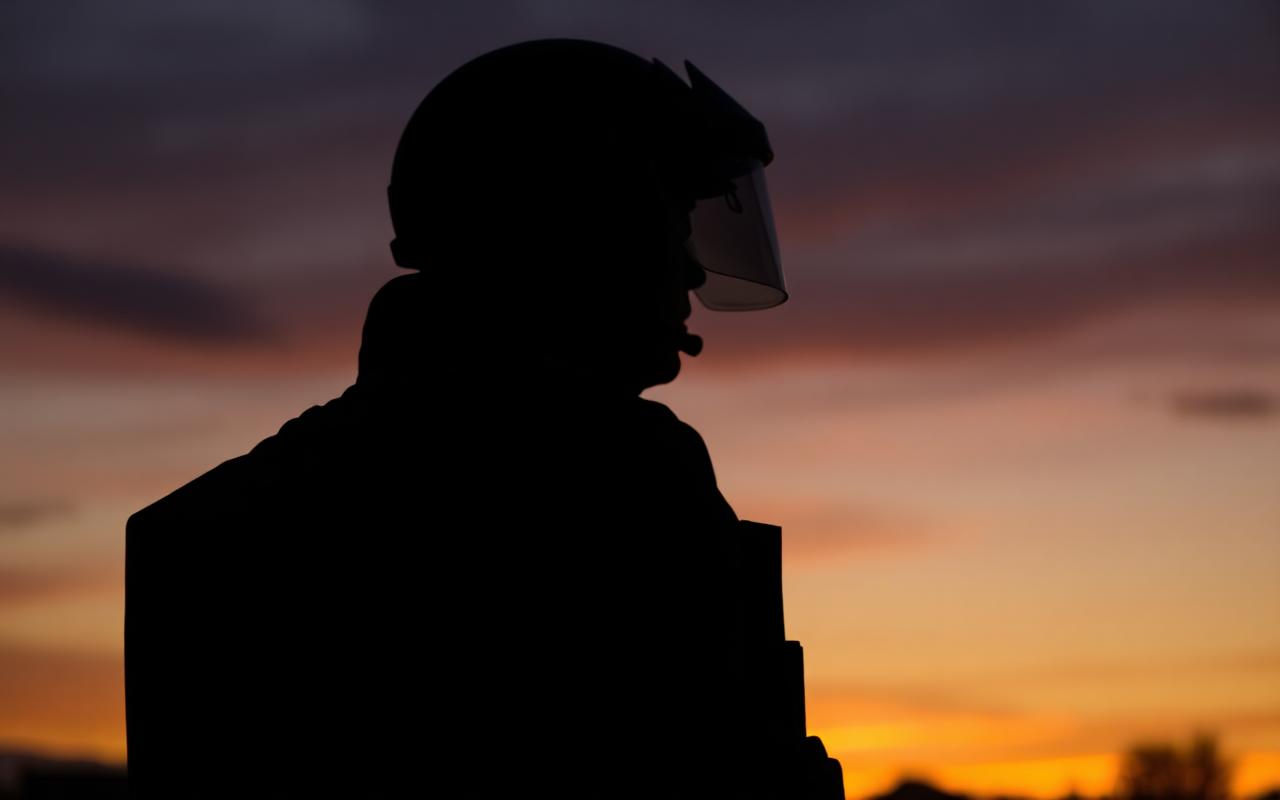
Dragon Skin™ vs. SAPI plates — flexible disc armor vs. rigid monolithic plates
The Small Arms Protective Insert — SAPI, and its successors ESAPI and XSAPI — has been the U.S. military's default rifle armor for a quarter century. It is a single monolithic ceramic tile bonded to a fiber backer, cut to a standard SAPI silhouette, and dropped into a plate carrier. It works. It has saved thousands of lives in two theaters of war. And it comes with a set of architectural trade-offs that flexible disc armor was invented to address.
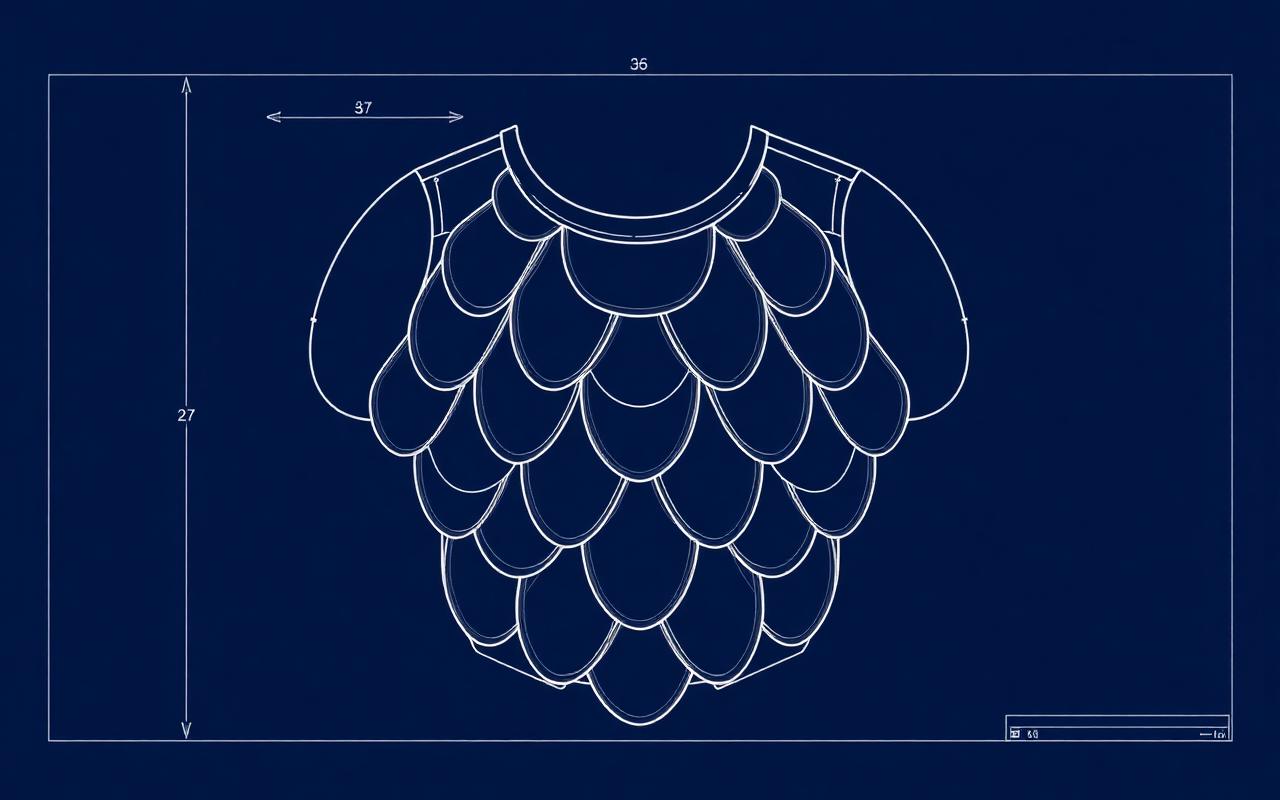
Dragon Skin™ is the original flexible rifle armor architecture: a matrix of overlapping ceramic discs — imagine a scaled fish — carried in a fabric substrate that lets each disc articulate independently. The strike face is not one big tile; it is dozens of small tiles working together. That single design choice is the fork in the road from which every downstream difference flows.
This piece is not an advertisement for one architecture over the other. It is a walk through what each design is doing under the round, what it costs the wearer, and where each earns its place in the kit.
**Coverage and mobility.** A SAPI plate is a rigid slab. To bend it around a torso the way a body actually curves — chest to sternum to ribs — you would have to break it, so instead the plate is manufactured with one fixed multi-curve geometry that averages across body types. A 5'6" officer and a 6'4" operator carry the same plate silhouette. The plate covers the vital box; it does not wrap.
A Dragon Skin™ panel articulates. Each disc pivots against its neighbors as the wearer twists, bends, or shoulders a long gun. That articulation means the same panel design fits a wider range of torso geometries and moves with the wearer instead of against them. Practical result: coverage extends further around the sides and toward the deltoids than a same-weight rigid plate, and the wearer's shoulder-fire position is not fighting the armor.
This is the architectural reason flexible rifle armor exists. Every other property downstream — the way it takes hits, the way it fits a carrier, the way it wears over an eight-hour shift — is a consequence of the disc geometry.
**Multi-hit behavior.** A SAPI plate stops a rifle round by cracking. That is not a defect; it is the design. Ceramic tiles defeat rifle threats by shattering the projectile and dissipating energy into the fracture network that propagates through the tile. The energy has to go somewhere, and in a monolithic tile it goes into the tile. A second round striking within a few inches of the first is landing in a compromised zone.
SAPI and ESAPI are single-hit standard in their base testing protocols for a reason. Real-world multi-hit performance exists — plates absolutely have stopped multiple rounds in the field — but the design does not distribute damage. One hit compromises a region around it that the wearer cannot see.
In a disc-array system, the fracture is contained. A round striking a Dragon Skin™ disc shatters that disc, but the fracture stops at the disc boundary. The neighboring discs — overlapping the compromised one — remain intact and continue to provide rifle-rated protection over the immediately surrounding area. The next round can land inches from the first and still hit a fresh, uncracked disc.
This is why NIJ 0101.06 Level III — the multi-hit standard — is a native fit for flexible disc armor. Six rounds across the panel exercises the geometry the design was built for.
**Weight and areal density.** Monolithic plates have a weight advantage on paper, per square inch of coverage, at any given threat level. A single dense ceramic tile is the most material-efficient way to defeat a rifle round on a first-shot basis, because the ceramic does not have to accommodate joints between tiles.
Disc armor pays a small penalty in areal density for the overlap. Each disc has to overlap its neighbors enough that the seam between them is never a weak point, which means a small percentage of the ceramic mass is redundant coverage. For that penalty the wearer gets multi-hit distribution, articulation, and extended coverage — and in most real deployments, the total system weight difference between a SAPI plate and a comparably rated flexible panel is smaller than the difference in effective coverage.
**Fit and carrier interface.** A SAPI plate goes into a plate pocket. The pocket is sized for the plate silhouette, the plate does not conform to the officer, and the carrier is designed around the plate rather than the body.
A flexible panel goes into a fabric carrier that is cut to the wearer. Because the panel articulates, the carrier can be custom-fit — patterned to the individual torso rather than to a standard silhouette. Custom fit is not a comfort feature; it is a survival feature. A panel that shifts during a foot pursuit is a panel that is not covering the vital box at the moment a round arrives.
**Threat level and edge cases.** SAPI-class plates set the standard for rifle-threat defeat and, at the ESAPI and XSAPI tiers, defeat higher-energy threats than most flexible systems in production. If the threat model is dedicated armor-piercing rounds at close range against a stationary target, monolithic plates remain the gold standard.
Flexible disc armor is engineered for the threat model that dominates most operational deployments: common rifle-caliber threats — 7.62×51 M80 ball, 5.56 M193 and M855, 7.62×39 MSC — delivered in dynamic multi-hit scenarios where the wearer is moving, shooting, and being shot at over an extended engagement. That is the deployment envelope where the disc architecture earns its penalty back several times over.
**Rear-face deformation and blunt-force load.** Both architectures are measured against the same 44 mm backface signature threshold. Both must pass. The mechanism differs: a rigid plate spreads impact energy across the plate's bonded backer, producing a broad, shallow crater in the clay witness. A disc-array panel concentrates the deforming disc into a smaller footprint but distributes the energy through the overlapping neighbors and the panel substrate. Both produce sub-44 mm BFS on certified systems; both produce survivable blunt-force loads on wearers who reach the hospital.
The wearer-side experience is what differs. A rigid plate transmits a single sharp impulse through the plate carrier. A disc panel transmits a distributed pulse through a larger contact area. Officers who have been hit in both architectures — and both are represented in the manufacturer's saves record — report the experience differently, though both are recoverable events.
**Cost and manufacturability.** SAPI is a mature high-volume supply chain. Monolithic ceramic tile production is well-understood, tooling is amortized across military contracts, and unit cost at scale is lower than any flexible system's unit cost at comparable coverage.
Flexible disc armor is a small-lot, high-craft product. Each disc is finished, matched, and assembled into a panel by hand at production volumes measured in hundreds per month, not tens of thousands. That is why flexible systems are priced above SAPI-class plates and why the customer base is agency task forces, protective details, and individual operators rather than a full-scale infantry issue.
**Where each architecture belongs.** SAPI-class monolithic plates are the right answer for infantry issue, static defensive positions, and any deployment where the primary threat is dedicated AP rounds delivered against a soldier in fixed body position — kneeling, prone, or vehicle-mounted. Coverage is defined by the plate silhouette; that is acceptable when the mission dictates a fixed carrier configuration.
Flexible disc armor is the right answer for dynamic ground work — plainclothes and covert operations, protective details, patrol officers who are in and out of vehicles all day, K9 handlers, and any operator whose torso is going to twist, reach, and shoulder a long gun for hours at a time. The articulation is not a luxury; it is the reason the vest gets worn in the first place.
The best-equipped agencies deploy both. A rigid ESAPI plate in an assault carrier for the deliberate stack; a Dragon Skin™ panel in a covert or patrol carrier for everything else. The armor does not have to be chosen once; the mission chooses it, shift by shift.
**Bottom line.** SAPI plates are single-tile ceramic armor optimized for maximum areal defeat efficiency against dedicated rifle threats. Dragon Skin™ is disc-array flexible armor optimized for multi-hit distribution, articulation, and extended coverage over an operational shift. They are not competing for the same job. They are two answers to two different questions about how a human being wears rifle-rated protection into a fight.
Have a procurement question this article didn't answer?
Our sales engineers respond directly. No call-center, no sales script.
Contact engineering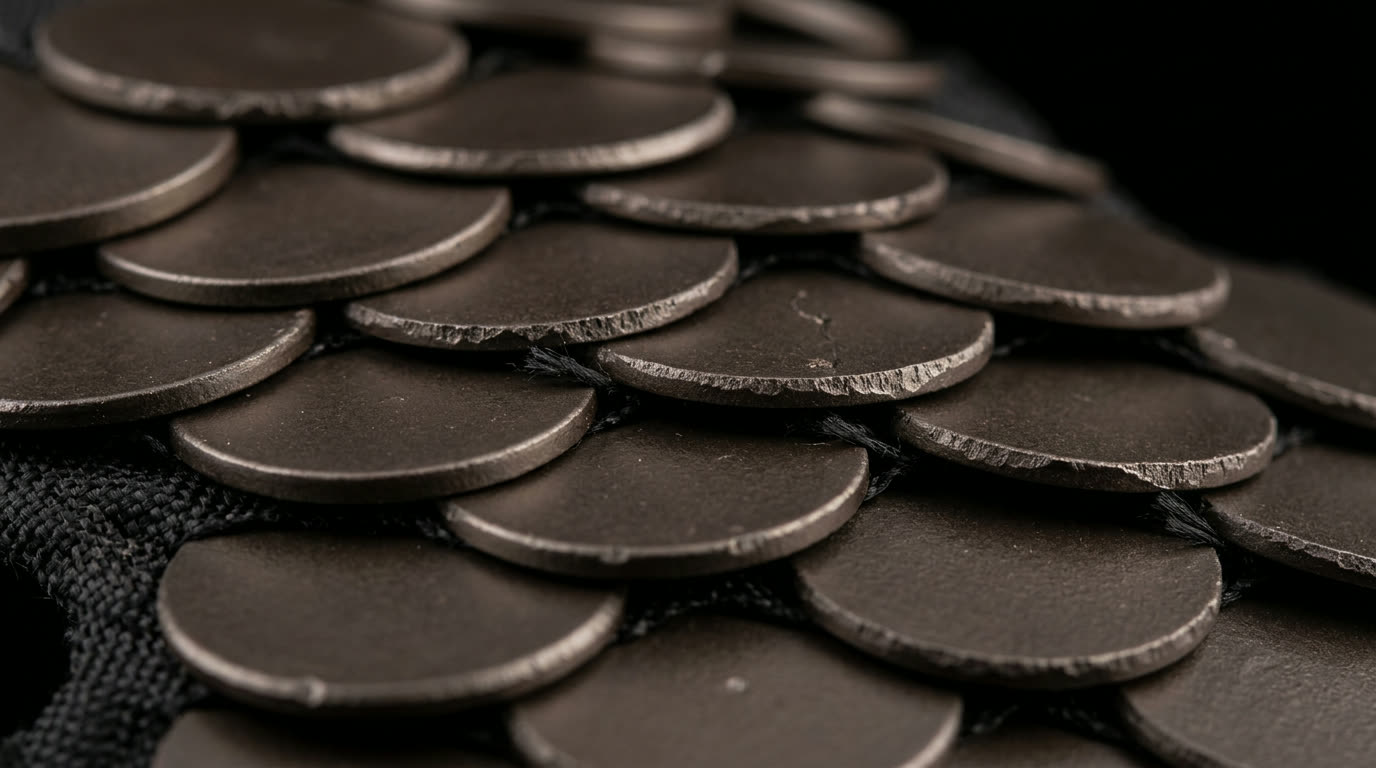
The relativity of backface signature — why the 44 mm number isn't what you think
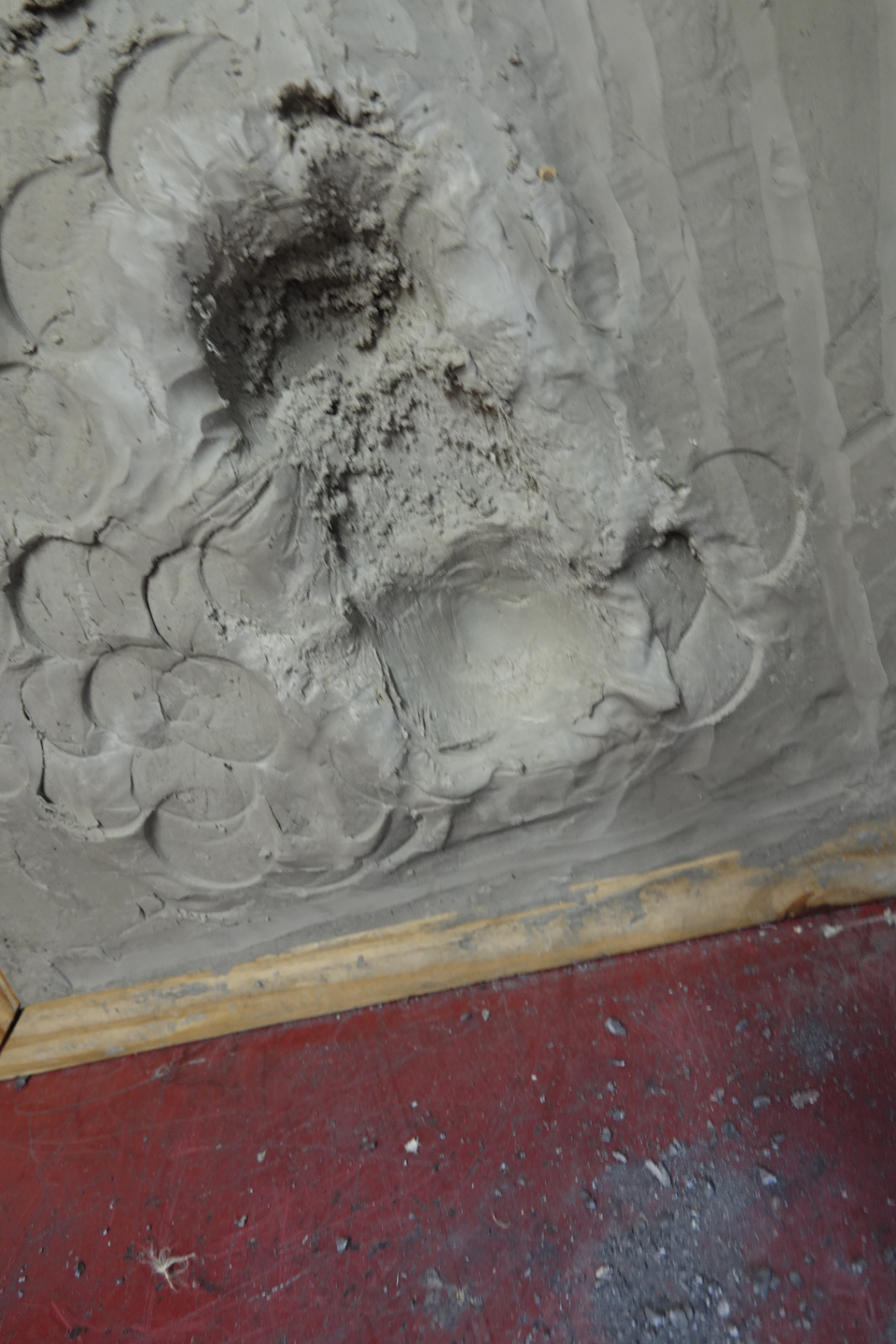
Backface signature, explained — what the clay actually tells you